How to Use Papain Enzyme in Meat Tenderization Formulations
Formulation guide for papain enzyme in meat tenderization: dosage, pH, temperature, QC, COA/TDS/SDS, pilot trials, and suppliers.
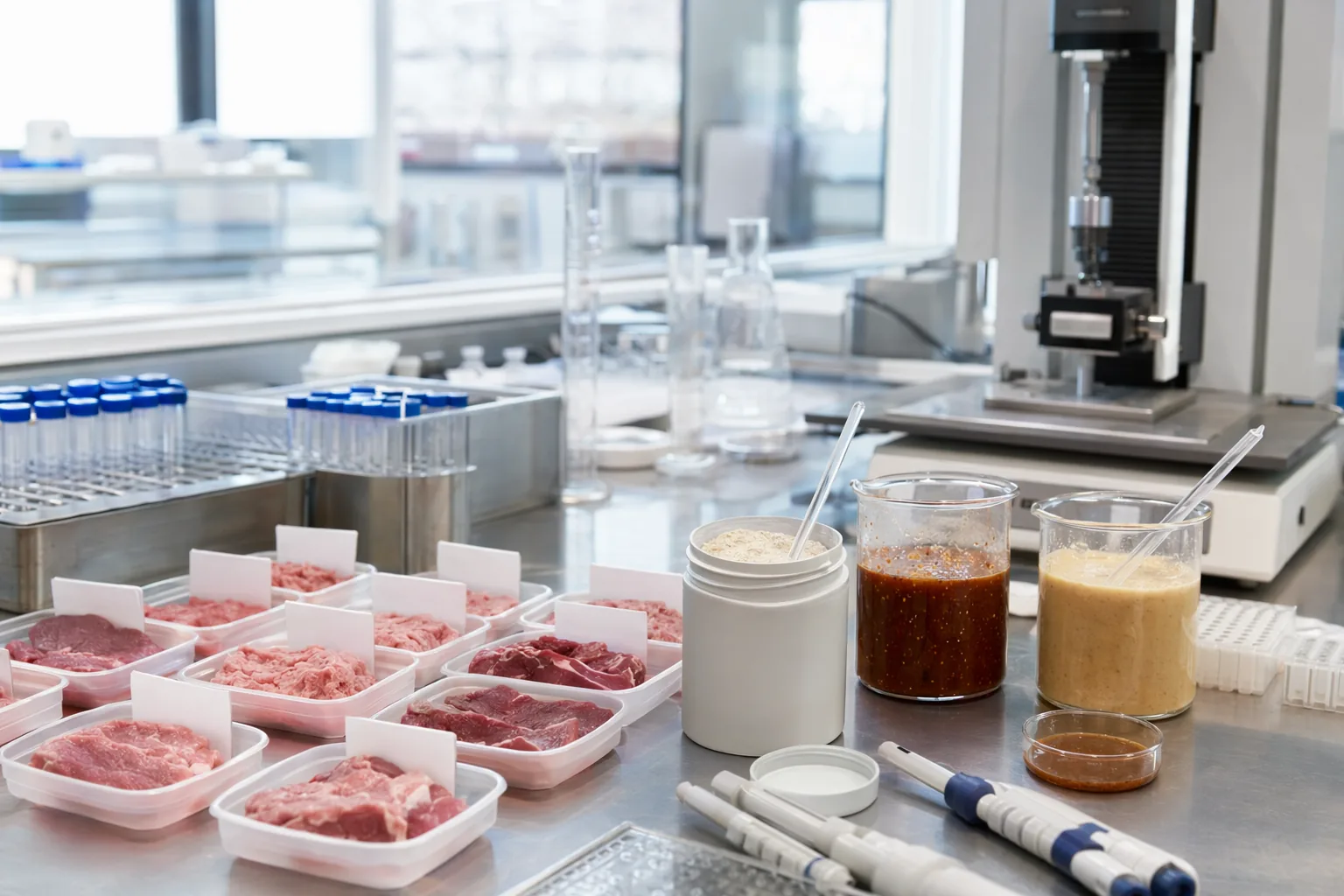
A practical guide for meat processors and ingredient buyers on selecting, dosing, validating and sourcing papain for controlled meat tenderization. To request a wholesale quote, send the grade or activity you need, the quantity per order or per month, and the destination country to hello@mail.enzymecontact.com, or use the quote form on our home page.
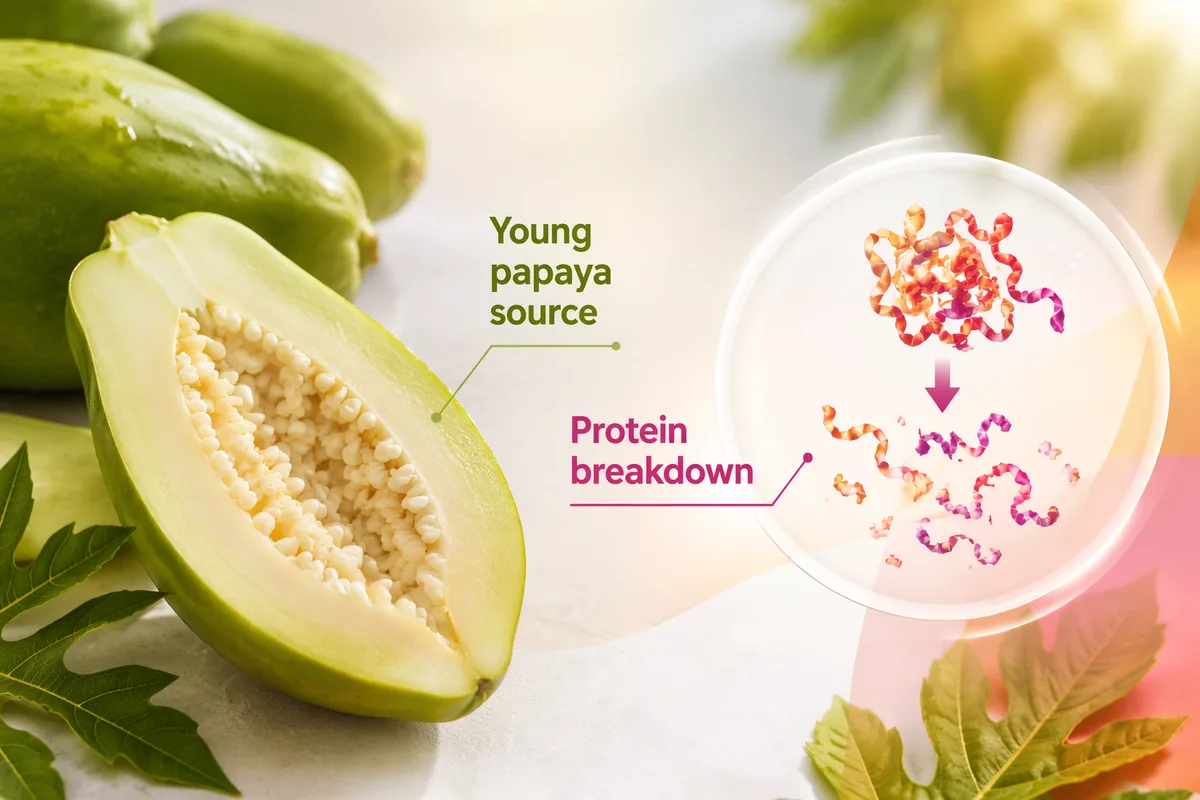
Why Papain Enzyme Is Used in Meat Systems
Papain enzyme is a cysteine protease obtained from papaya latex and supplied in powder, granule, or liquid formats for food processing. In meat tenderization, enzyme papain breaks peptide bonds in muscle proteins, improving bite and reducing toughness when exposure is properly controlled. It is especially useful for beef, poultry, marinades, injected products, restructured meat, and value-added cuts where consistent texture is a commercial requirement. Buyers may also see the terms papain papaya enzyme, papaya enzyme, or even enzym papain in international purchasing searches. For industrial formulation, the key is not simply adding more papain enzyme powder; it is matching enzyme activity, substrate, process temperature, contact time, and inactivation conditions. Over-treatment can create mushy texture, purge, and weak slice integrity, so validation should be based on sensory panels and instrumental texture data.
Primary function: controlled protein hydrolysis for texture improvement. • Common formats: dry powder, granules, and stabilized liquids. • Best practice: specify activity units, not only inclusion percentage.
Starting Dosage, pH, Temperature, and Contact Time
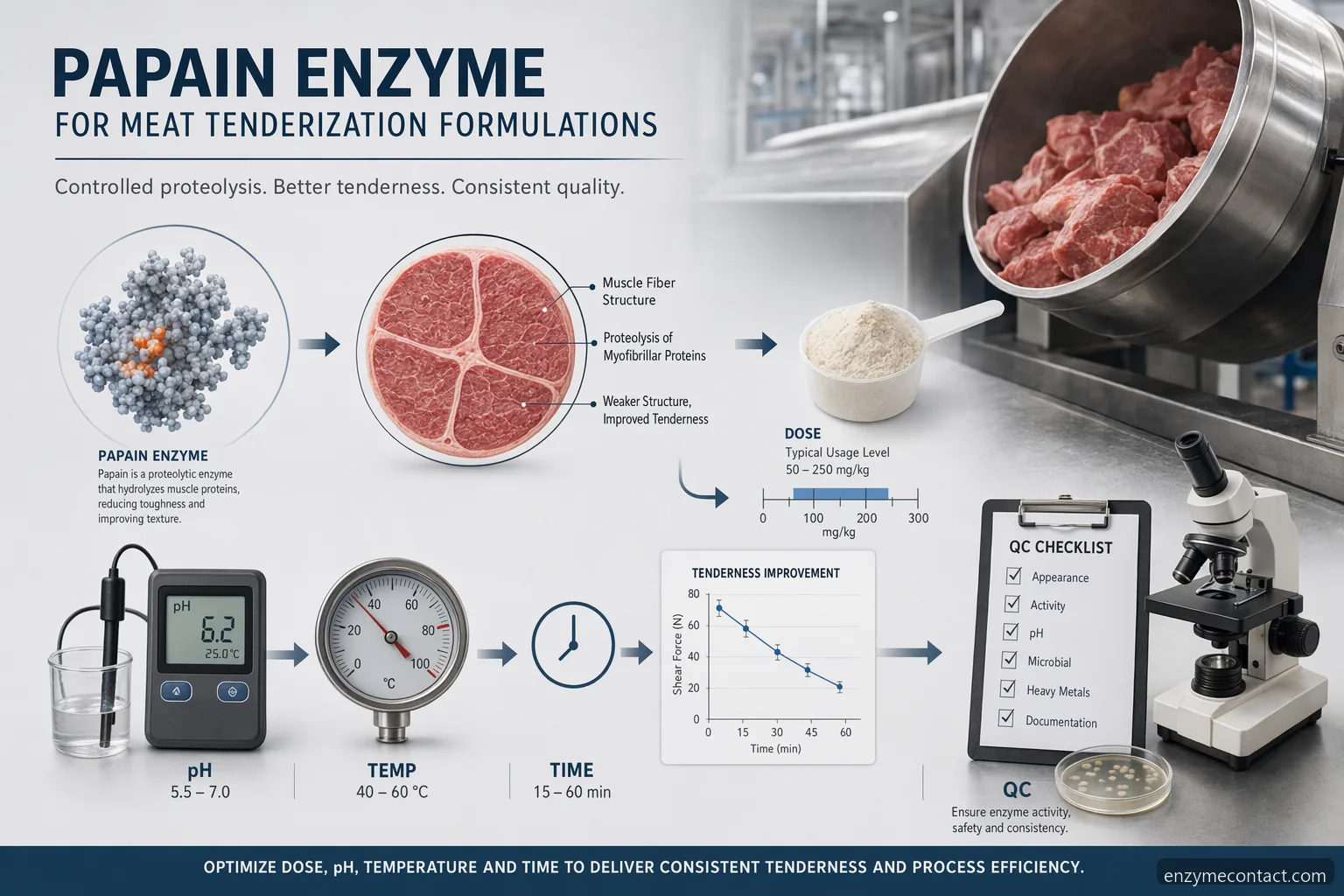
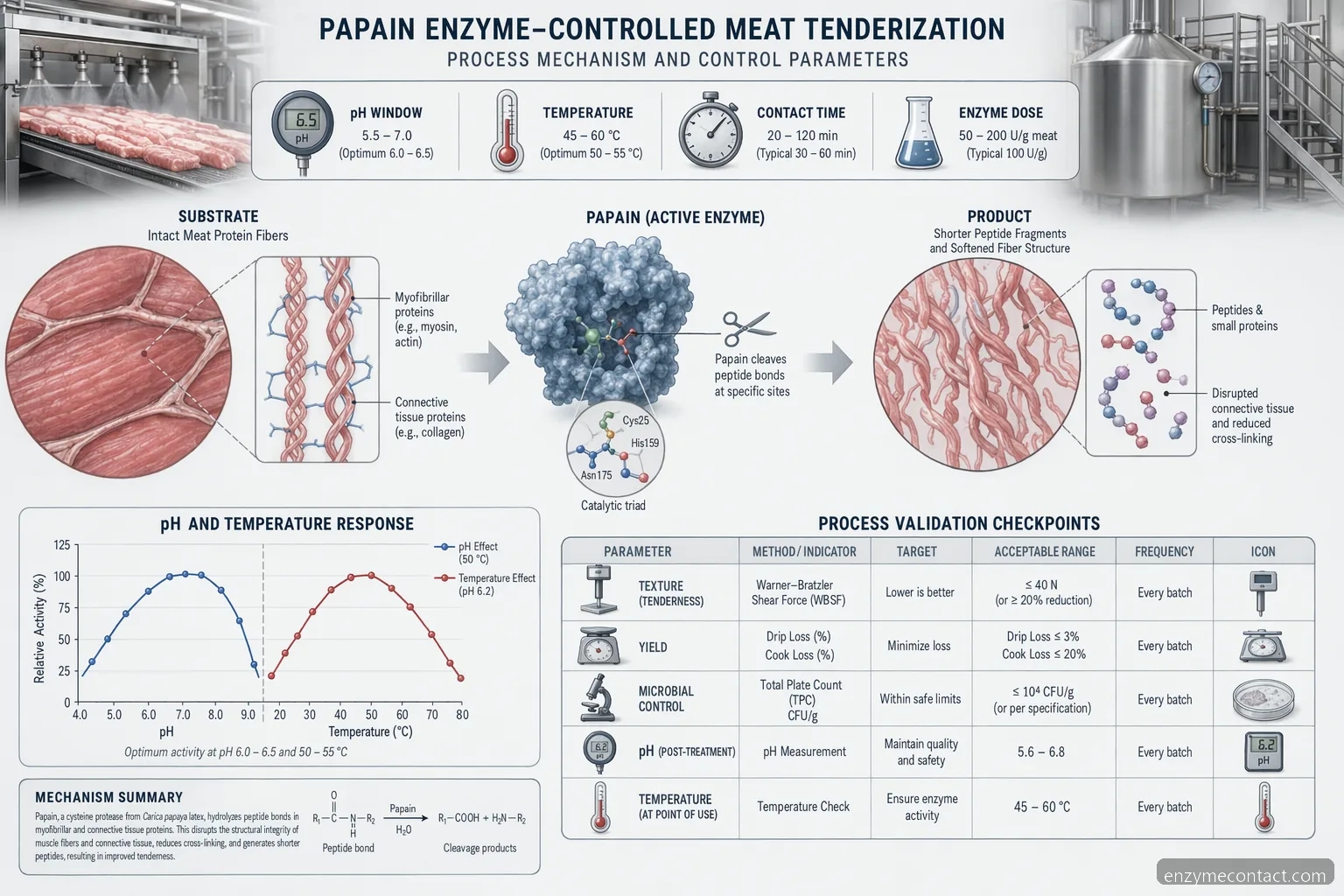
A practical starting point for papain enzyme trials is 20-200 ppm active enzyme preparation on meat weight, adjusted to the supplier activity declaration and process objective. Some concentrated grades require far lower use levels, while lower-activity blends may require higher additions. Papain generally performs well around pH 5.5-7.0, with activity often increasing at warmer processing temperatures; however, meat quality, microbial control, and process safety usually limit the usable temperature window. Many processors test 4-10 degrees C for long marination, 20-30 degrees C for short controlled contact, or brief warm treatments when permitted by the process. Contact time may range from 15 minutes to several hours. The formulation target should be defined by shear force, cook yield, sliceability, marinade pickup, purge, and sensory bite, followed by heat inactivation where the finished process allows.
Trial range: 20-200 ppm enzyme preparation on meat weight. • Typical pH screen: 5.5-7.0 for meat applications. • Validate time and temperature against texture and food safety limits. • Use activity-based calculations because supplier potencies differ.
Formulation Routes: Dry Rub, Marinade, Injection, or Blend
Papain can be incorporated through dry seasoning, tumble marinade, brine injection, surface treatment, or pre-blended functional systems. Dry rubs are simple but may create surface-heavy tenderization unless hydration and dwell time are sufficient. Marinades and vacuum tumbling improve distribution, while injection can deliver papain enzyme into thicker cuts where uniformity matters. In comminuted or restructured meat, the enzyme should be dispersed before final forming, with contact time tightly controlled. Some developers evaluate bromelain papain enzyme systems to balance hydrolysis profile, but combined proteases increase the need for pilot validation. For the pineapple-derived protease in such systems, this separate page on pineapple enzyme powder gives background. Keep papain separate from highly reactive ingredients until use if stability is uncertain. Salt, phosphates, acids, reducing agents, and preservatives can affect performance or stability, so screen the actual commercial formula rather than relying on generic dosage advice.
Injection supports internal distribution in thick cuts. • Marinades and tumbling improve contact and uniformity. • Dry applications need hydration control. • Combination protease systems require tighter QC.
Quality Control Checks Before Scale-Up
Quality control should begin with incoming papain enzyme powder or liquid inspection and continue through pilot production. Review the COA for enzyme activity, microbiological limits, heavy metals where applicable, moisture, appearance, lot number, and recommended storage. The TDS should define activity method, carrier, solubility, pH guidance, temperature guidance, shelf life, and handling conditions. The SDS should be available for worker safety because protease dusts can be respiratory sensitizers. In application testing, measure marinade pH, viscosity, pickup, yield, purge, cook loss, and texture. Texture analyzer shear force, trained sensory review, and visual slice integrity are more reliable than subjective softness alone. Compare treated meat against untreated control and current commercial formula. Confirm that heat processing or downstream storage stops further tenderization and prevents texture drift during distribution.
Request COA, TDS, and SDS for every commercial lot. • Track lot-to-lot activity and moisture variation. • Use treated and untreated controls in pilot trials. • Monitor texture drift through intended shelf life.
Supplier Qualification and Cost-in-Use
Selecting a papain supplier for meat tenderization is a technical and commercial decision. Do not qualify solely on kilogram price. Compare declared activity, assay method, carrier system, solubility, dusting, storage stability, minimum order quantity, lead time, documentation quality, and responsiveness during trials. A higher-activity papain enzyme may reduce inclusion rate, shipping cost, and formula solids, but only if performance is consistent in the target meat system. Cost-in-use should include dosage, yield improvement, downgrade reduction, rework, sensory acceptance, labor, and any process changes needed for control. Buyers should distinguish industrial food-grade papain from papain enzyme supplements or papain enzyme exfoliator materials, which are designed for different markets and documentation expectations. Before approval, run bench screening, pilot validation, production trial, and shelf-life confirmation under the exact plant process.
Compare activity-adjusted cost, not only unit price. • Confirm documentation, traceability, and technical support. • Validate in the real meat matrix and plant process. • Separate food processing grades from supplement or cosmetic grades.
Technical Buying Checklist
Buyer Questions
There is no universal dosage because papain activity, meat type, cut thickness, pH, temperature, and contact time all affect performance. For initial industrial trials, many formulators screen about 20-200 ppm enzyme preparation on meat weight, then adjust by activity units and texture results. Always compare treated samples with an untreated control and confirm yield, purge, bite, and slice integrity before scale-up.
Yes, some processors evaluate bromelain papain enzyme combinations to achieve a different tenderization profile. However, combined protease systems can hydrolyze meat faster and may increase the risk of soft, pasty, or weak texture if not controlled. Run a matrix trial covering dose, pH, temperature, and time, then verify performance through cooking, chilled storage, and the intended distribution period.
A qualified papain supplier should provide a current COA for the lot, a TDS describing activity, use guidance and storage, and an SDS for safe handling. Depending on buyer requirements, ask for ingredient composition, carrier information, allergen statement, country of origin, traceability, shelf-life data, and microbiological specifications. Documentation should match the supplied grade and the intended food processing use.
Neither format is automatically better. Papain enzyme powder often offers good storage efficiency and lower transport cost, but it requires dust control and proper dispersion. Liquid papain may be easier to meter into brines or marinades, yet stability and preservative systems must be checked. Choose the format that gives accurate dosing, safe handling, stable activity, and consistent distribution in your plant process.
Papain for Research & Industry
Need Papain for your lab or production process?
ISO 9001 certified · Food-grade & research-grade · Ships to 80+ countries
Frequently Asked Questions
What is the best dosage of papain enzyme for meat tenderization?
There is no universal dosage because papain activity, meat type, cut thickness, pH, temperature, and contact time all affect performance. For initial industrial trials, many formulators screen about 20-200 ppm enzyme preparation on meat weight, then adjust by activity units and texture results. Always compare treated samples with an untreated control and confirm yield, purge, bite, and slice integrity before scale-up.
Can papain be used with bromelain in meat formulations?
Yes, some processors evaluate bromelain papain enzyme combinations to achieve a different tenderization profile. However, combined protease systems can hydrolyze meat faster and may increase the risk of soft, pasty, or weak texture if not controlled. Run a matrix trial covering dose, pH, temperature, and time, then verify performance through cooking, chilled storage, and the intended distribution period.
What documents should a papain supplier provide?
A qualified papain supplier should provide a current COA for the lot, a TDS describing activity, use guidance and storage, and an SDS for safe handling. Depending on buyer requirements, ask for ingredient composition, carrier information, allergen statement, country of origin, traceability, shelf-life data, and microbiological specifications. Documentation should match the supplied grade and the intended food processing use.
Is papain enzyme powder better than liquid papain?
Neither format is automatically better. Papain enzyme powder often offers good storage efficiency and lower transport cost, but it requires dust control and proper dispersion. Liquid papain may be easier to meter into brines or marinades, yet stability and preservative systems must be checked. Choose the format that gives accurate dosing, safe handling, stable activity, and consistent distribution in your plant process.
Request a Wholesale Quote for Tenderizing Papain
Send the grade or activity, the quantity per order or per month and the destination country. We quote 1 kg, 5 kg and 25 kg packs for meat processors, seasoning makers and resellers, with a free sample for qualified inquiries. See the specification on /applications/papain-powder-commercial/. See our application page for Papain Powder for Commercial Processing at /applications/papain-powder-commercial/ for specs, MOQ, and a free 50 g sample.
Contact Us to Contributehello@mail.enzymecontact.com