Papain Enzyme Peel: Industrial Papain Supplier Guide for Meat Tenderization
Source papain enzyme for meat tenderization with pH, temperature, dosage, QC, COA/TDS/SDS, pilot validation, and cost-in-use guidance.
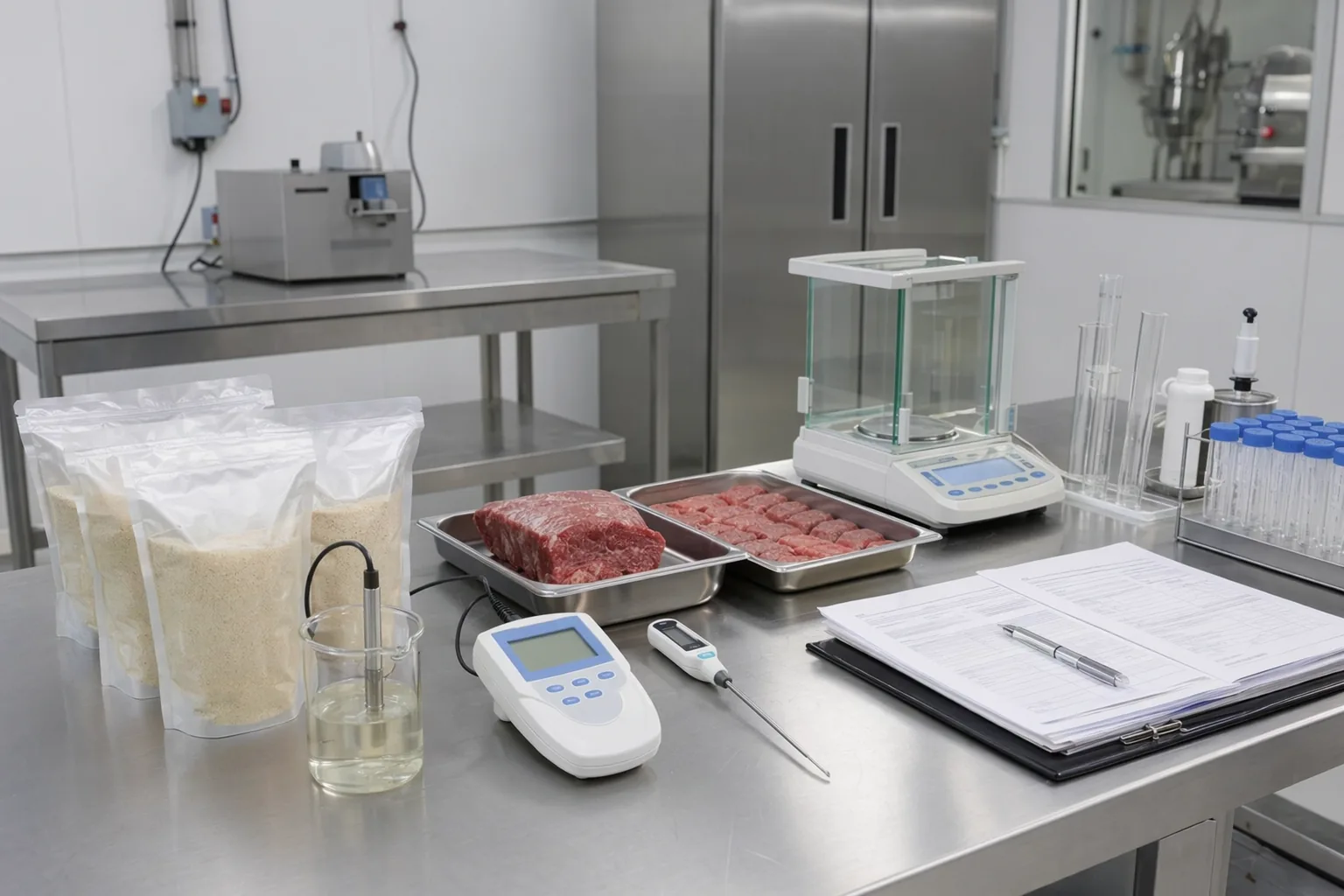
For meat processors evaluating papain enzyme peel terminology, this buyer-focused guide explains how to specify papaya-derived protease, validate performance, and qualify a reliable papain supplier.
What B2B Buyers Mean by Papain Enzyme Peel
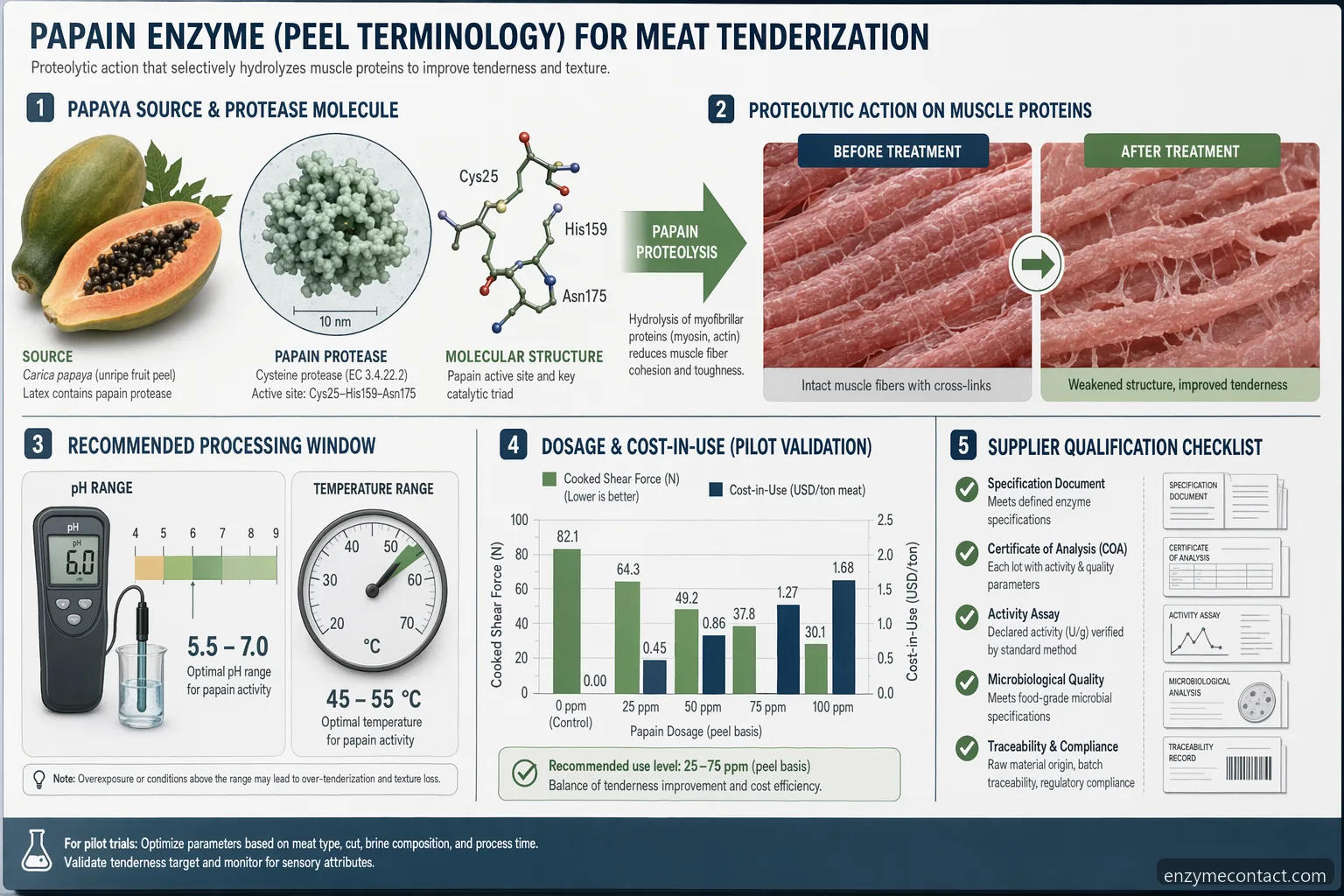
In industrial sourcing, the search phrase papain enzyme peel often points to papain recovered from papaya latex or papaya raw materials, not a consumer skin peel or supplement claim. For meat tenderization, papain enzyme is valued because it hydrolyzes myofibrillar and connective tissue proteins under controlled process conditions. The result should be a measurable tenderness improvement without excessive mushiness, purge, or flavor impact. Buyers comparing papain, enzym papain, enzyme papain, and papain papaya enzyme should focus on activity units, carrier system, solubility, particle size, microbiological quality, and regulatory suitability for the intended market. The same enzyme family may also appear in brewing or pharmaceutical supply chains, but meat applications require process-specific validation. A dependable papain supplier should help translate lab activity into plant-scale dosage, dwell time, and cost-in-use.
Use industrial specifications, not consumer supplement descriptions. • Confirm the activity assay and how units are defined. • Match grade and documentation to meat-processing requirements.
Recommended Processing Window for Meat Tenderization
Papain is a broad-range cysteine protease, but meat performance depends on substrate, brine chemistry, temperature, contact time, and downstream heat treatment. Many pilot trials begin at pH 5.5–7.0, where papain enzyme remains practical for common meat systems. Accelerated tenderization is often evaluated at 45–65°C for 30–120 minutes, while injected, tumbled, or marinated products may use lower temperatures with longer contact times under refrigerated control. Excessive enzyme exposure can soften texture too far, so trials should include a negative control and at least two lower-dose options. Cooking can reduce residual proteolytic activity; processors commonly validate internal cook temperatures above normal product lethality targets rather than relying on assumptions. Salt, phosphates, acids, antioxidants, and smoke systems may influence performance, so test the full formulation.
Pilot pH range: typically 5.5–7.0. • Accelerated trial temperature: commonly 45–65°C. • Cold processing requires longer dwell time and tighter control. • Validate enzyme inactivation in the finished process.
Dosage, Pilot Validation, and Cost-in-Use
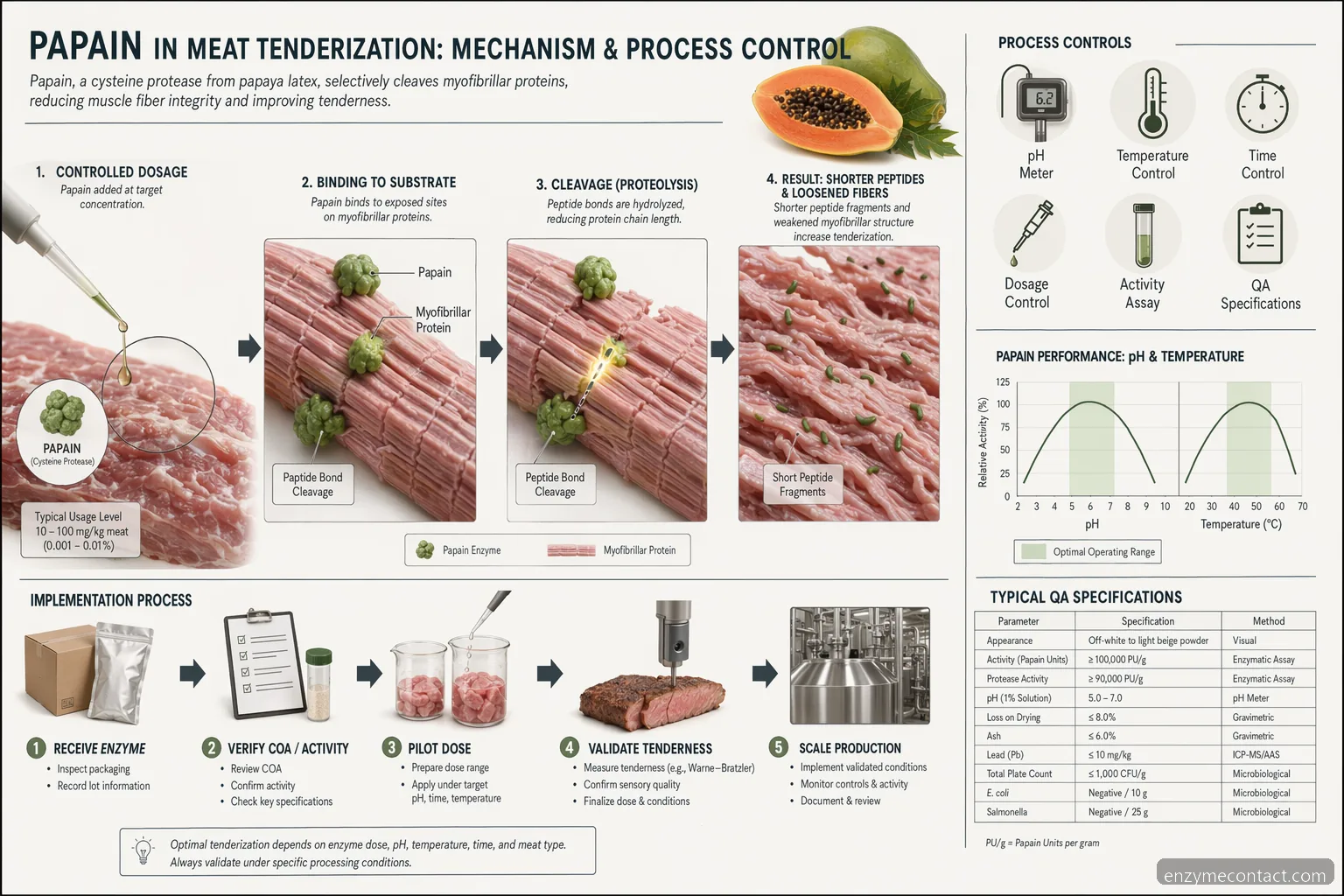
Papain dosage should be based on declared activity, not powder weight alone. A practical screening band for commercial papain enzyme preparations is often 0.02–0.20% by meat weight, or an equivalent activity-based range agreed with the supplier. Start low, then increase only if texture targets are not achieved. For injected or tumbled meat, confirm brine dispersion, injection yield, tumble time, hold time, and distribution uniformity. For topical applications, assess surface penetration and risk of uneven tenderization. Pilot validation should measure slice shear force, sensory texture, purge, cook yield, pH, color, and finished product appearance. The lowest dose that meets tenderness and yield requirements usually provides the best cost-in-use. If comparing bromelain papain enzyme blends, evaluate each blend against straight papain under the same process conditions.
Dose by activity units whenever possible. • Run at least three dose levels plus a control. • Track tenderness, purge, cook yield, and sensory texture. • Select by cost-in-use, not price per kilogram only.
Specification Documents Buyers Should Request
A qualified papain supplier should provide a current Certificate of Analysis, Technical Data Sheet, and Safety Data Sheet for each commercial grade. The COA should identify lot number, activity result, test method reference, appearance, moisture if applicable, and microbiological results relevant to food processing. The TDS should explain recommended storage, shelf life, solubility or dispersion behavior, carrier information, and suggested application ranges. The SDS should support safe handling, dust-control planning, PPE selection, and worker exposure review. Buyers of papain enzyme supplements may prioritize label claims, but industrial meat processors need process fit, documentation, and repeatable performance. Ask whether the supplier can provide sample quantities from representative lots and whether future shipments will be matched to the approved specification.
COA: activity, lot number, appearance, microbial data. • TDS: use range, storage, carrier, shelf life. • SDS: handling, dust precautions, PPE guidance. • Confirm samples represent commercial production lots.
How to Qualify a Papain Supplier
Supplier qualification should combine technical performance, documentation discipline, and commercial reliability. Ask how papain papaya enzyme raw materials are controlled, how activity is standardized, and how batch-to-batch variation is managed. Review change-notification practices for raw material source, carrier, activity range, allergen status, and manufacturing location where applicable. Confirm lead time, minimum order quantity, packaging sizes, and storage requirements before locking a formula. A strong papain supplier will discuss realistic process limits rather than promising universal results. They should also support side-by-side trials against current tenderizers, including papain enzyme exfoliator or cosmetic-grade materials only as examples of what not to use for meat. Approval should be based on plant trials, specification agreement, supply continuity, and transparent cost-in-use.
Review traceability and activity standardization. • Confirm change-notification expectations. • Evaluate lead time, MOQ, packaging, and shelf life. • Approve only after plant-scale or pilot-scale validation.
Technical Buying Checklist
Buyer Questions
For B2B meat processing, papain enzyme peel is best treated as a search phrase for papaya-derived papain enzyme, not as a cosmetic peel or supplement product. The relevant purchase item is an industrial or food-processing papain grade with defined proteolytic activity, documentation, and process guidance. Always confirm suitability with COA, TDS, SDS, and pilot testing in your meat system.
A practical first screen is often 0.02–0.20% commercial papain preparation by meat weight, but the correct level depends on declared activity, meat cut, injection or tumbling method, pH, temperature, and target texture. Run a control plus multiple dose levels. Choose the lowest dose that achieves tenderness goals without excessive softening, purge, or yield loss.
The main variables are pH, temperature, contact time, enzyme distribution, and final heat treatment. Many trials begin around pH 5.5–7.0. Accelerated tests may use 45–65°C for a defined hold, while chilled marination requires longer dwell time. Validate the full formulation because salt, phosphates, acids, and other ingredients can change enzyme performance.
Compare straight papain and bromelain papain enzyme blends under identical meat, dosage, pH, temperature, and dwell-time conditions. Measure shear force, purge, cook yield, and sensory texture. Blends can perform differently depending on substrate and process, so avoid choosing by activity label alone. Cost-in-use should include required dosage, yield effect, rework risk, and supplier support.
At minimum, request a lot-specific COA, current TDS, and SDS. The COA should show activity and relevant quality results. The TDS should describe application range, storage, carrier, shelf life, and handling guidance. The SDS supports safe plant handling. For supplier qualification, also ask about traceability, change notification, packaging, lead time, and representative pilot samples.
Papain for Research & Industry
Need Papain for your lab or production process?
ISO 9001 certified · Food-grade & research-grade · Ships to 80+ countries
Frequently Asked Questions
Is papain enzyme peel the same as papain used for meat tenderization?
For B2B meat processing, papain enzyme peel is best treated as a search phrase for papaya-derived papain enzyme, not as a cosmetic peel or supplement product. The relevant purchase item is an industrial or food-processing papain grade with defined proteolytic activity, documentation, and process guidance. Always confirm suitability with COA, TDS, SDS, and pilot testing in your meat system.
What dosage of papain enzyme should a meat processor test first?
A practical first screen is often 0.02–0.20% commercial papain preparation by meat weight, but the correct level depends on declared activity, meat cut, injection or tumbling method, pH, temperature, and target texture. Run a control plus multiple dose levels. Choose the lowest dose that achieves tenderness goals without excessive softening, purge, or yield loss.
What process conditions are most important for papain tenderization?
The main variables are pH, temperature, contact time, enzyme distribution, and final heat treatment. Many trials begin around pH 5.5–7.0. Accelerated tests may use 45–65°C for a defined hold, while chilled marination requires longer dwell time. Validate the full formulation because salt, phosphates, acids, and other ingredients can change enzyme performance.
How should we compare papain with bromelain papain enzyme blends?
Compare straight papain and bromelain papain enzyme blends under identical meat, dosage, pH, temperature, and dwell-time conditions. Measure shear force, purge, cook yield, and sensory texture. Blends can perform differently depending on substrate and process, so avoid choosing by activity label alone. Cost-in-use should include required dosage, yield effect, rework risk, and supplier support.
What documents should a papain supplier provide before approval?
At minimum, request a lot-specific COA, current TDS, and SDS. The COA should show activity and relevant quality results. The TDS should describe application range, storage, carrier, shelf life, and handling guidance. The SDS supports safe plant handling. For supplier qualification, also ask about traceability, change notification, packaging, lead time, and representative pilot samples.
Related: Papain Powder for Commercial Processing
Turn This Guide Into a Supplier Brief Request papain enzyme specifications, samples, and pilot support for your meat tenderization process. See our application page for Papain Powder for Commercial Processing at /applications/papain-powder-commercial/ for specs, MOQ, and a free 50 g sample.
Contact Us to Contribute