Enzyme Powder Papain for Meat Tenderization: Specification Checklist
Compare enzyme powder papain for meat tenderization: activity, pH, dosage, COA, pilot validation, cost-in-use, and supplier checks.
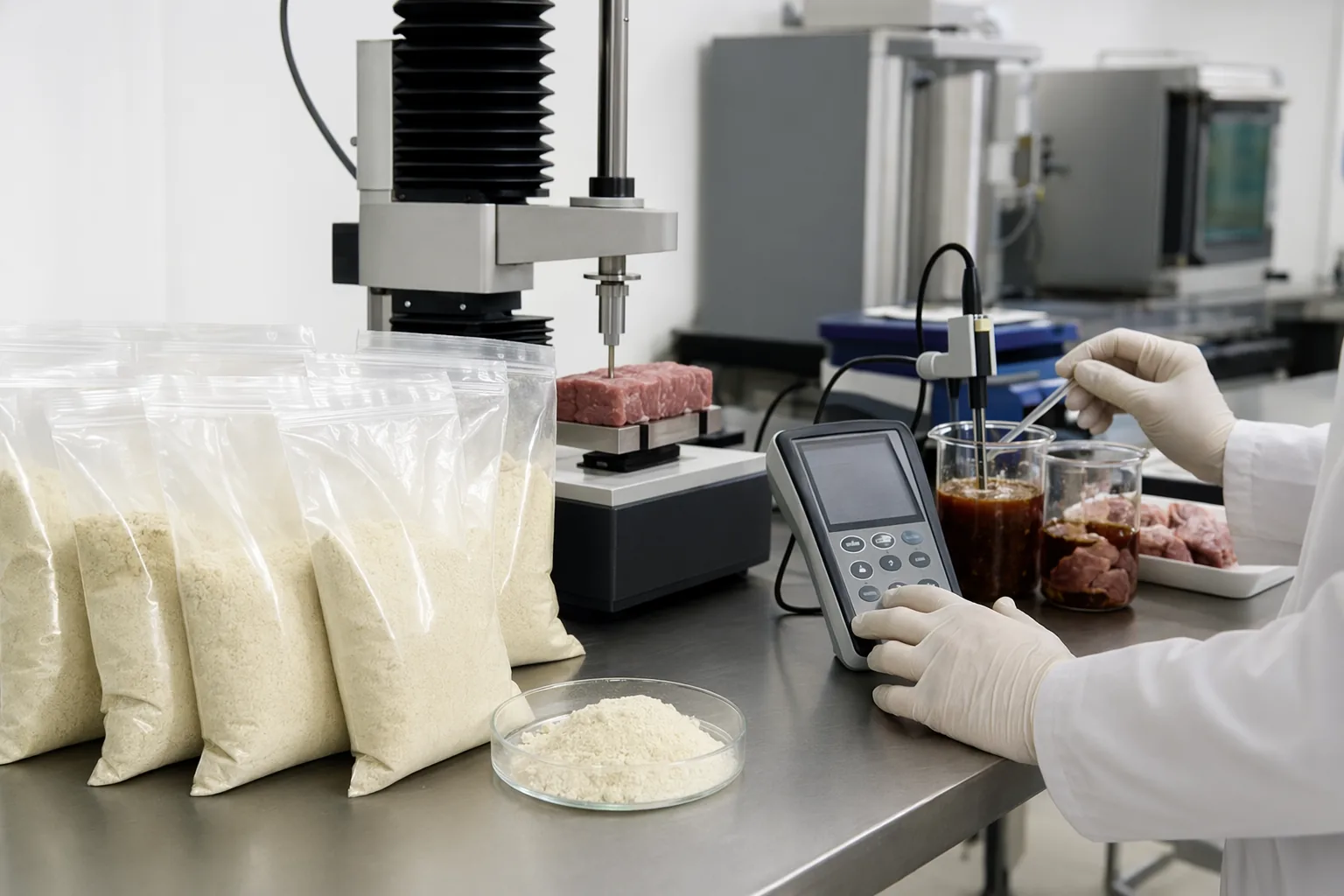
For industrial meat processors, the best papain enzyme powder is not simply the lowest-priced drum. Compare activity, handling, validation data, and supplier controls before you buy.
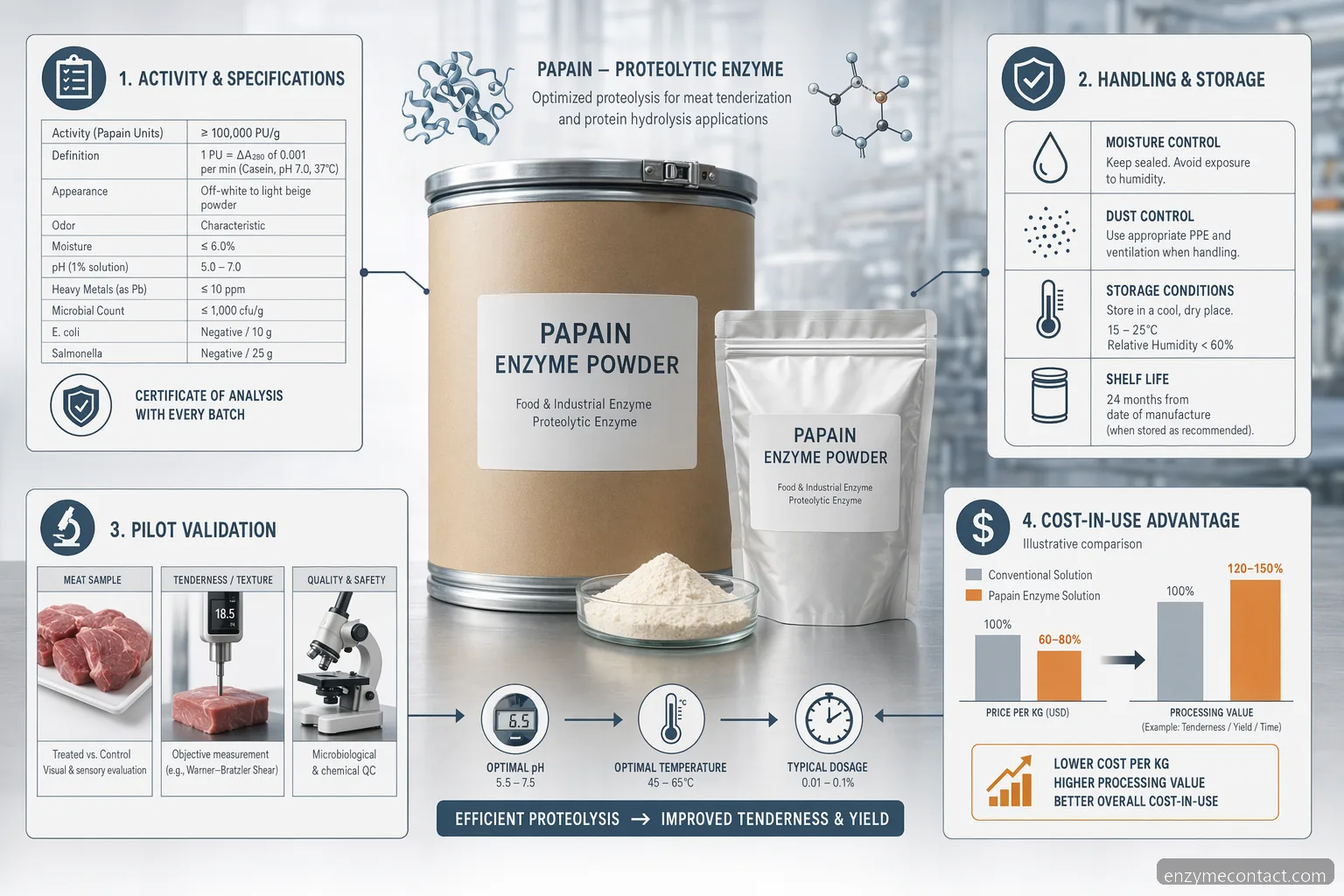
Compare papain by processing value, not price per kilogram
Enzyme powder papain is a proteolytic enzyme derived from papaya latex and used in meat tenderization to hydrolyze muscle proteins. In B2B procurement, comparison should start with functional value: how consistently the papain enzyme reaches the target bite, cook yield, and appearance under your plant conditions. A low-price papain enzyme powder may become expensive if its activity varies, dust handling is poor, or the supplier cannot provide reliable documentation. Buyers comparing papain, papaya enzyme, or enzym papain should define the finished product requirement first, then work backward to activity, dosage, contact time, and inactivation step. For injected, tumbled, or marinated products, performance may differ from simple surface application because penetration and residence time are different. Build your shortlist around validated specifications, responsive technical support, and dependable supply rather than commodity pricing alone.
Start with target tenderness and yield. • Compare normalized cost per activity unit. • Reject vague specifications without lot data.
Core specification points to request from every supplier
Before you buy papain enzyme powder, request a current Technical Data Sheet, Safety Data Sheet, and sample Certificate of Analysis. The TDS should define enzyme activity method, physical form, recommended pH and temperature range, storage conditions, dosage guidance, and shelf-life basis. The COA should report lot-specific results, not only generic marketing values. For meat applications, common comparison points include declared activity, moisture, particle size, color, odor, carrier or diluent, heavy metals where applicable, and microbiological limits. Ask whether the papain enzyme powder for sale is standardized to a target activity and whether formulation changes are communicated before shipment. If you purchase wholesale papain enzyme powder, confirm packaging integrity, palletization, and container conditions. These details reduce variation between receiving, formulation, and plant-scale production.
COA: lot-specific analytical results. • TDS: processing and storage guidance. • SDS: handling and safety information. • Change control: written notification process.
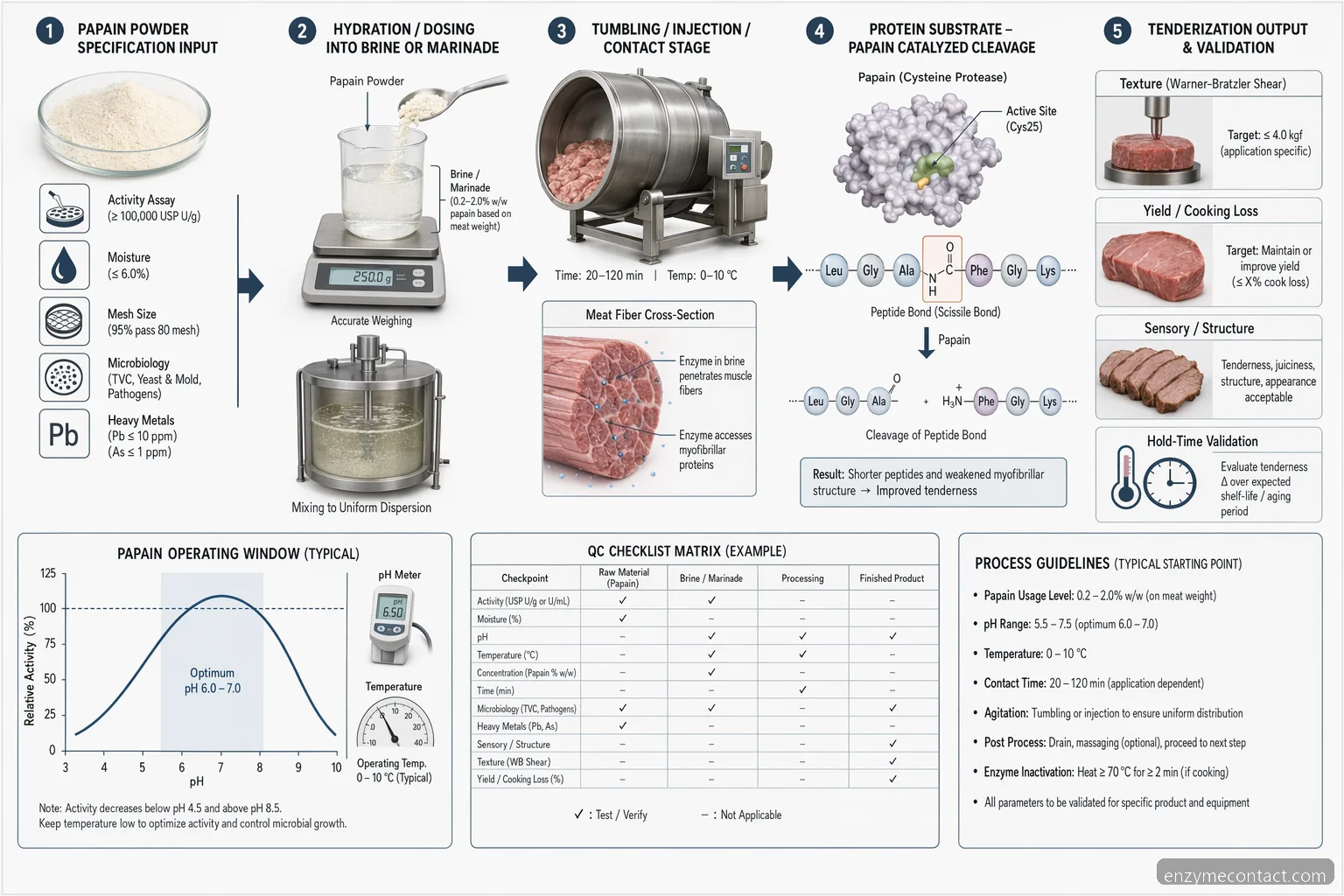
Typical process conditions for meat tenderization trials
Papain is usually evaluated under mildly acidic to neutral meat-processing conditions, often around pH 5.5 to 7.0, although supplier data should be followed for the exact enzyme powder papain grade. Activity generally increases with warmth, but meat quality and microbiological controls limit practical processing temperatures. Many processors screen papain enzyme powder at refrigerated holding, chilled tumbling, or controlled warm steps, then inactivate during cooking. Initial dosage trials often start in broad bands such as 10 to 100 ppm active preparation in the finished formulation, adjusted for enzyme activity, meat cut, contact time, and desired bite. Overdosing or excessive holding can cause mushy texture and sliceability problems. Pilot work should compare untreated control, low, medium, and high dosage points while tracking pH, pickup, purge, cook loss, texture, and sensory results.
Screen pH around 5.5-7.0 when compatible with the product. • Use supplier activity data to calculate dose. • Confirm cooking provides effective enzyme inactivation.
Pilot validation and quality-control checks
A specification checklist is only useful if it predicts performance in your process. Run pilot validation with the same meat source, brine system, salt level, phosphate status, tumble time, injection rate, cook schedule, and packaging format used commercially. For each papain enzyme lot, document dosage calculation, batch temperature, pH, residence time, and operator observations. Quality-control checks can include marinade pH, pickup percentage, purge after holding, cook yield, shear force or texture profile, slice integrity, and trained sensory review. Compare the papain enzyme powder against an untreated control and, where relevant, against a current approved supplier. Retain samples and pilot records to support purchasing decisions. If results vary across lots, ask the supplier to explain activity method precision, standardization practice, and storage recommendations before scale-up.
Use plant-like conditions in the pilot. • Measure texture, yield, purge, and sliceability. • Keep lot numbers linked to trial data.
Supplier qualification and cost-in-use comparison
When comparing papain supplier options, include more than unit price. Cost-in-use should normalize the enzyme powder papain by declared activity, recommended dose, yield impact, rework risk, freight, shelf life, and minimum order quantity. A supplier offering wholesale papain enzyme powder may be attractive, but only if documentation, traceability, and delivery reliability match your production risk. Ask about lead time, sample availability, technical response time, packaging sizes, storage requirements, and how deviations are handled. For regional sourcing searches such as papain enzyme powder Taiwan, compare import documentation, language support, and logistics as carefully as enzyme activity. The best supplier for a meat processor is the one that helps convert a lab result into repeatable production performance while maintaining transparent COA, TDS, SDS, and lot-control practices.
Compare cost per functional dose. • Confirm lead time and inventory stability. • Require documentation before approval. • Evaluate technical support during trials.
Technical Buying Checklist
Buyer Questions
Compare offers by functional activity, not only price per kilogram. Normalize each quote by declared activity unit, expected dosage, freight, shelf life, packaging, and trial performance. Review the supplier COA, TDS, and SDS before purchasing. A higher-priced papain enzyme powder can be lower cost-in-use if it provides consistent tenderness, less purge, fewer texture defects, and stronger technical support.
There is no universal dosage because meat cut, pH, salt level, marinade pickup, contact time, temperature, and enzyme activity all matter. Many processors begin with a screening ladder, such as low, medium, and high points within a supplier-recommended band. Track texture, purge, cook yield, and sliceability. Always validate enzyme powder papain in your own process before setting a commercial specification.
Request a lot-specific Certificate of Analysis, current Technical Data Sheet, and Safety Data Sheet. The COA should report activity and agreed quality attributes. The TDS should explain use conditions, storage, shelf life, and dosage guidance. The SDS supports safe handling and training. For approved supply, also ask for traceability, packaging details, and written notification for material changes.
Yes. Regional sourcing, standardization method, carrier choice, packaging, storage history, and activity test method can all affect performance. Searches such as papain enzyme powder Taiwan may identify viable suppliers, but every candidate still needs document review and pilot validation. Compare samples under the same meat formulation and process conditions before approving a supplier for routine production.
Papain for Research & Industry
Need Papain for your lab or production process?
ISO 9001 certified · Food-grade & research-grade · Ships to 80+ countries
Frequently Asked Questions
What is the best way to compare enzyme powder papain offers?
Compare offers by functional activity, not only price per kilogram. Normalize each quote by declared activity unit, expected dosage, freight, shelf life, packaging, and trial performance. Review the supplier COA, TDS, and SDS before purchasing. A higher-priced papain enzyme powder can be lower cost-in-use if it provides consistent tenderness, less purge, fewer texture defects, and stronger technical support.
What dosage of papain enzyme powder should meat processors test first?
There is no universal dosage because meat cut, pH, salt level, marinade pickup, contact time, temperature, and enzyme activity all matter. Many processors begin with a screening ladder, such as low, medium, and high points within a supplier-recommended band. Track texture, purge, cook yield, and sliceability. Always validate enzyme powder papain in your own process before setting a commercial specification.
Which documents should be requested before buying papain enzyme powder?
Request a lot-specific Certificate of Analysis, current Technical Data Sheet, and Safety Data Sheet. The COA should report activity and agreed quality attributes. The TDS should explain use conditions, storage, shelf life, and dosage guidance. The SDS supports safe handling and training. For approved supply, also ask for traceability, packaging details, and written notification for material changes.
Can papain enzyme powder for sale from different regions perform differently?
Yes. Regional sourcing, standardization method, carrier choice, packaging, storage history, and activity test method can all affect performance. Searches such as papain enzyme powder Taiwan may identify viable suppliers, but every candidate still needs document review and pilot validation. Compare samples under the same meat formulation and process conditions before approving a supplier for routine production.
Related: Papain Powder for Commercial Processing
Turn This Guide Into a Supplier Brief Request papain specifications, samples, and pilot support for your meat tenderization process. See our application page for Papain Powder for Commercial Processing at /applications/papain-powder-commercial/ for specs, MOQ, and a free 50 g sample.
Contact Us to Contribute