Papain Supplier Guide for Meat, Seafood and Seasoning Manufacturers
Wholesale papain for meat processors, seafood plants, seasoning blenders and resellers: grades, formats, what to test in a pilot run and what to send for a quote.
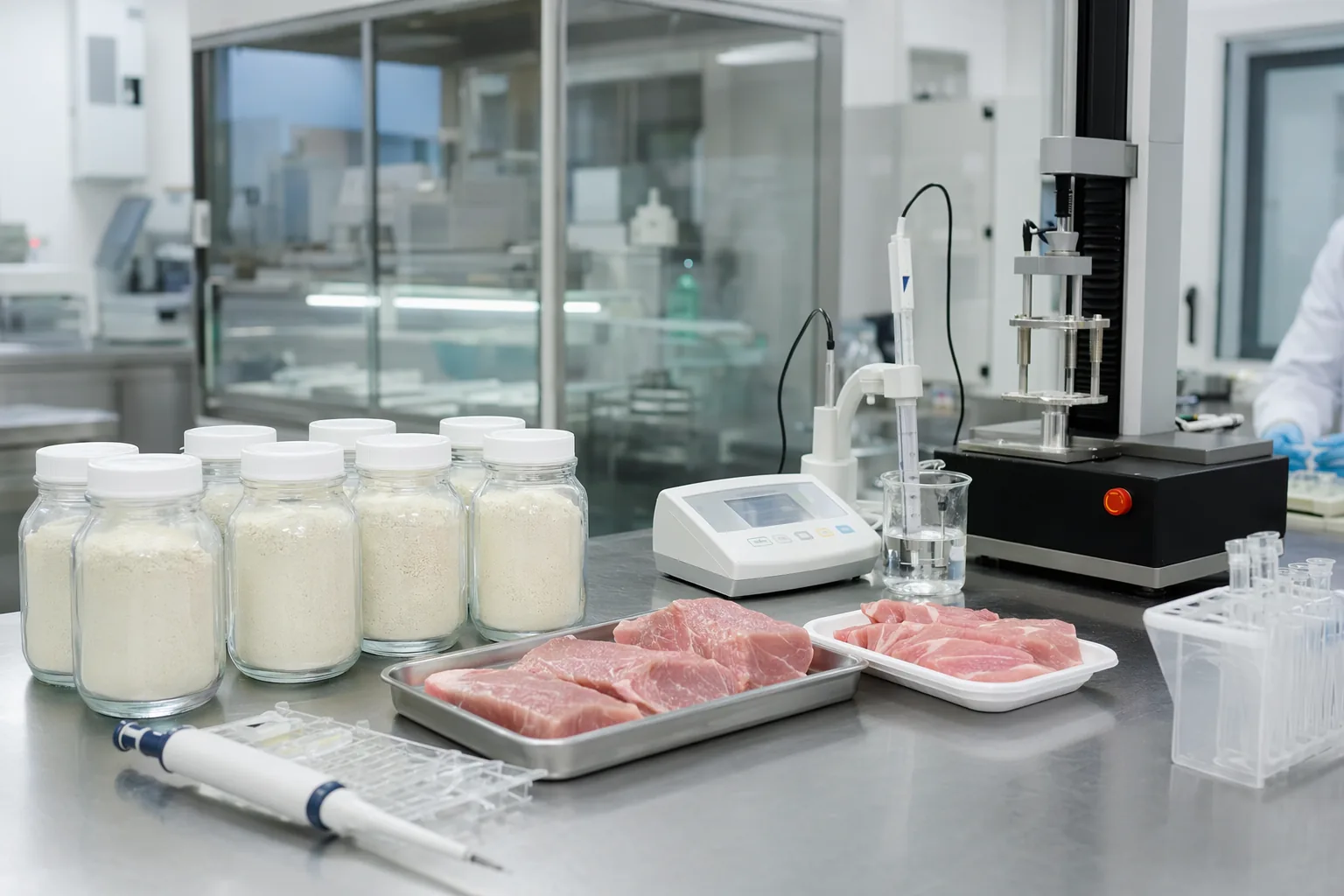
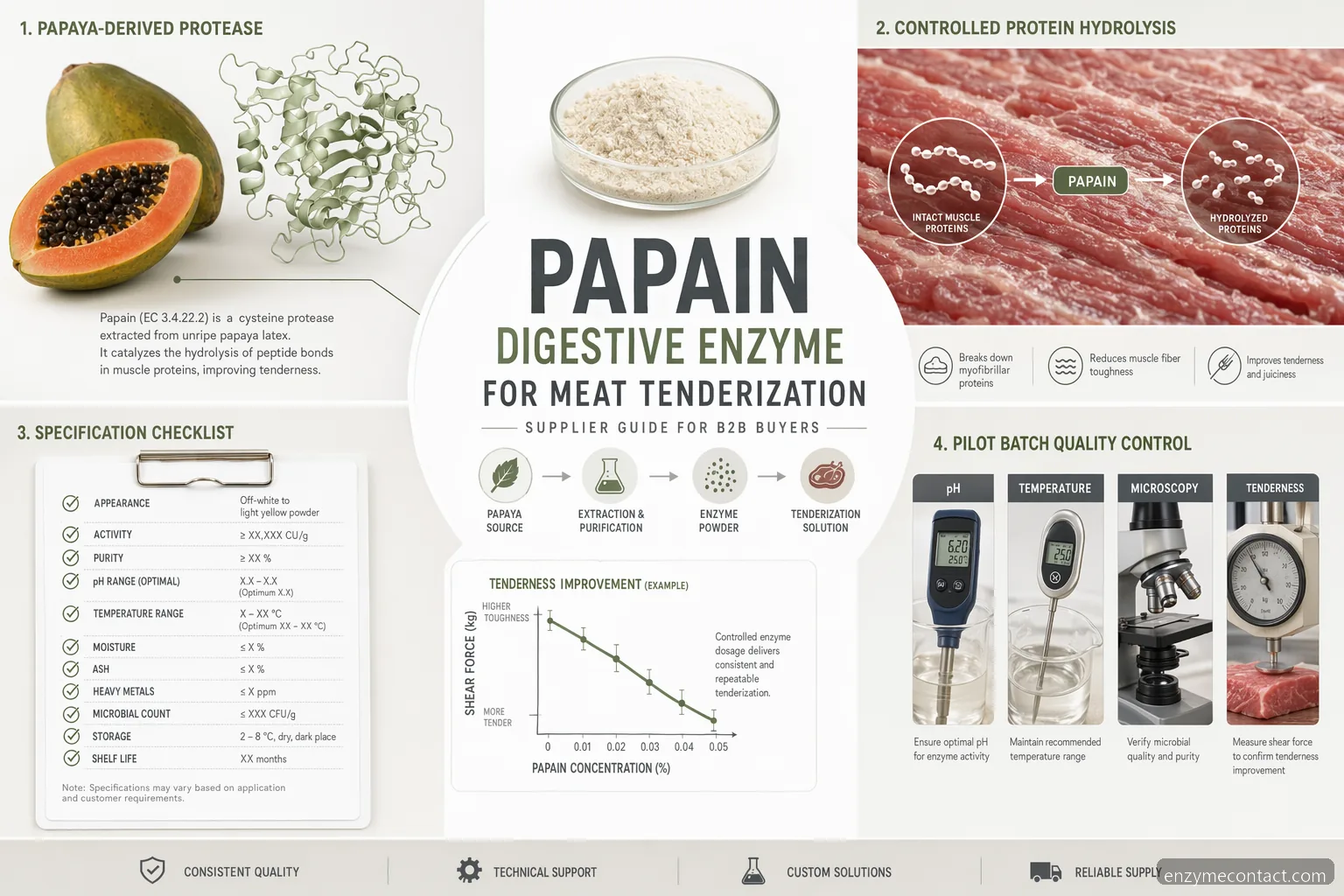
Buying papain for a tenderizing line, a seasoning blend or for resale? This guide covers how commercial buyers choose a grade, what to check before a volume order and what to send for a quote. We supply papain in 1 kg, 5 kg and 25 kg packs to manufacturers and resellers. To request a wholesale quote, send the grade or activity you need, the quantity per order or per month, and the destination country to hello@mail.enzymecontact.com, or use the quote form on our home page.
What papain does for a food business
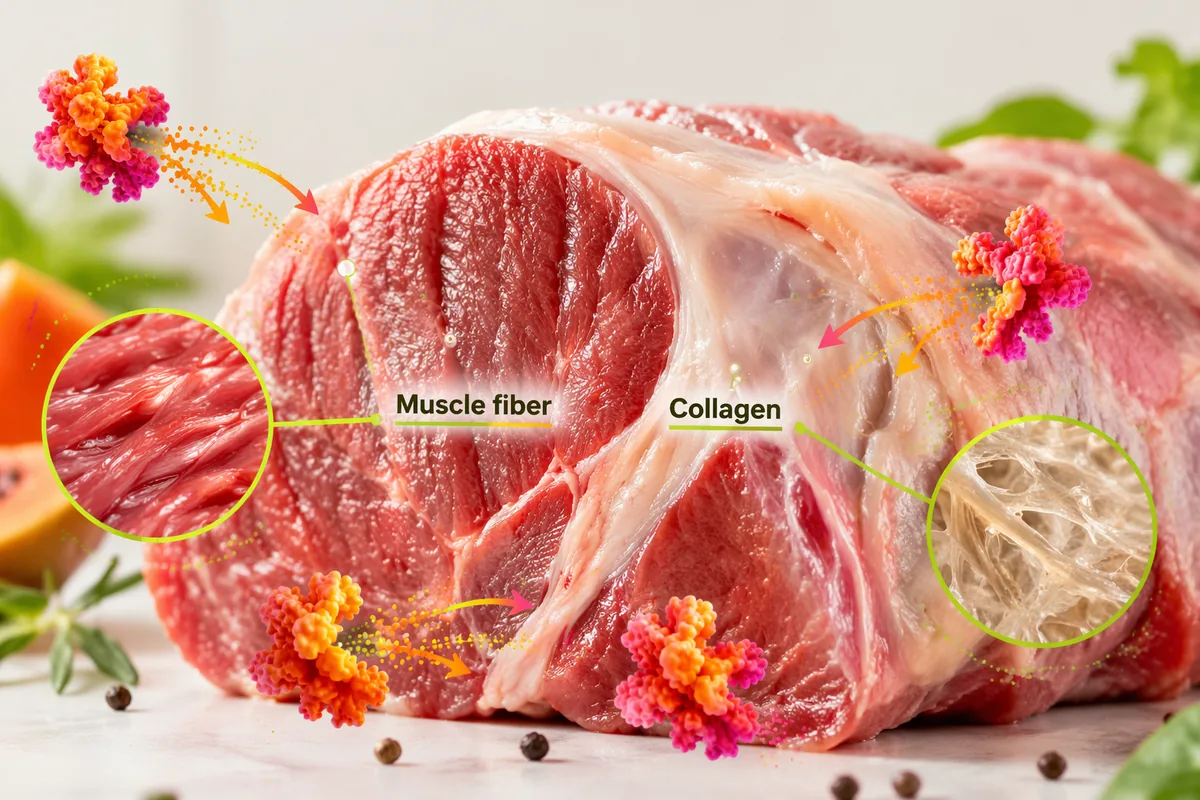
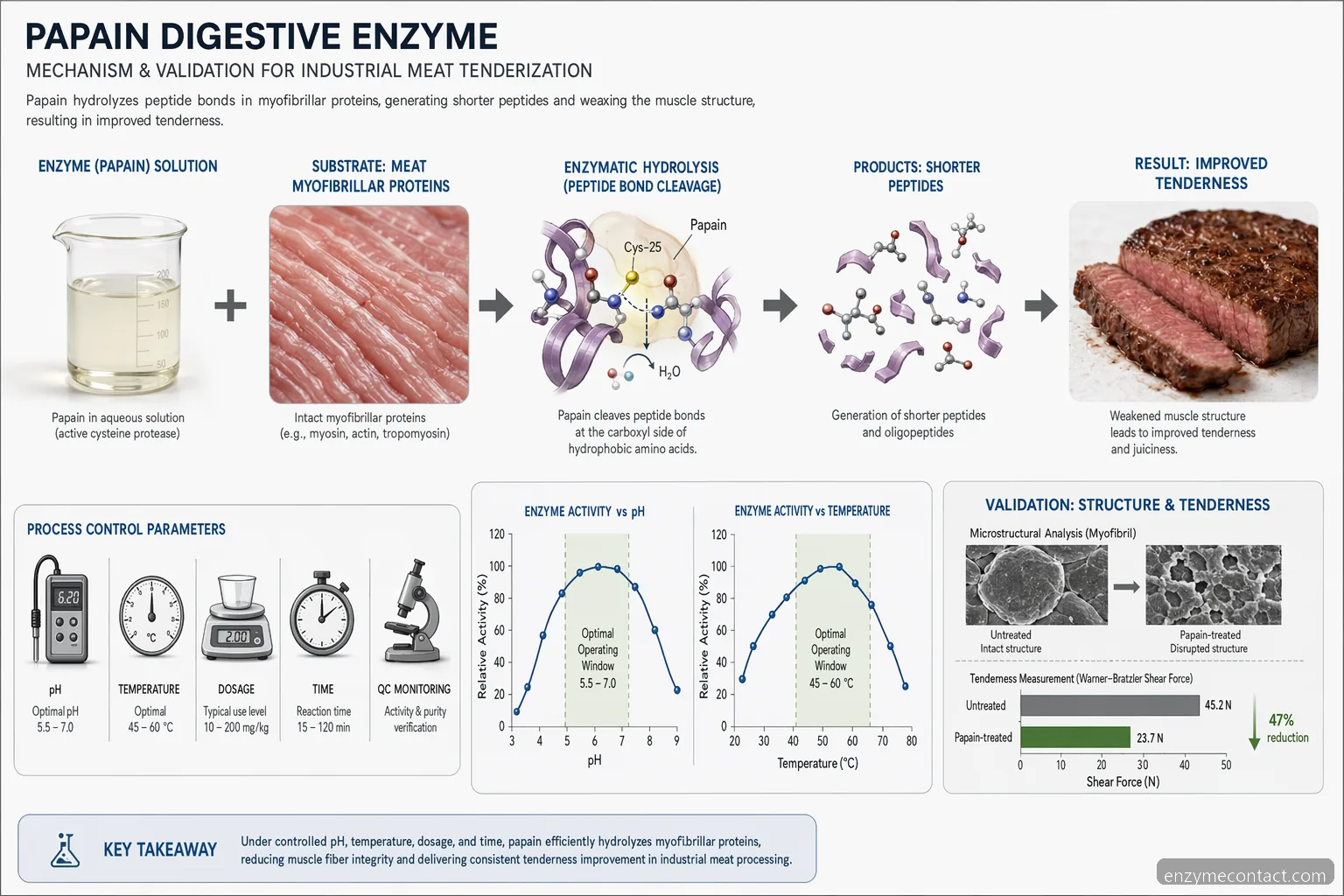
Papain is a protease from green papaya latex. It cuts muscle and connective-tissue proteins, so a processor can turn tough cuts, offal and seafood into products with a consistent, saleable bite. The business case is simple: more of the raw material sells at a better grade, marinating and conditioning take less time, and texture complaints fall when the dose is controlled. Too much enzyme, too long a hold or uneven mixing gives the opposite result: soft, pasty texture, purge and slices that fall apart. That is why buyers qualify papain in a pilot run before they place a volume order.
Typical buyers: meat and offal processors, seafood plants, marinade and seasoning blenders, snack-food makers, ingredient distributors. • Typical outcome: a repeatable bite at the lowest dose that reaches it. • Typical failure: over-treatment from dose, hold time or poor dispersion.
How tenderizing papain is sold to processors
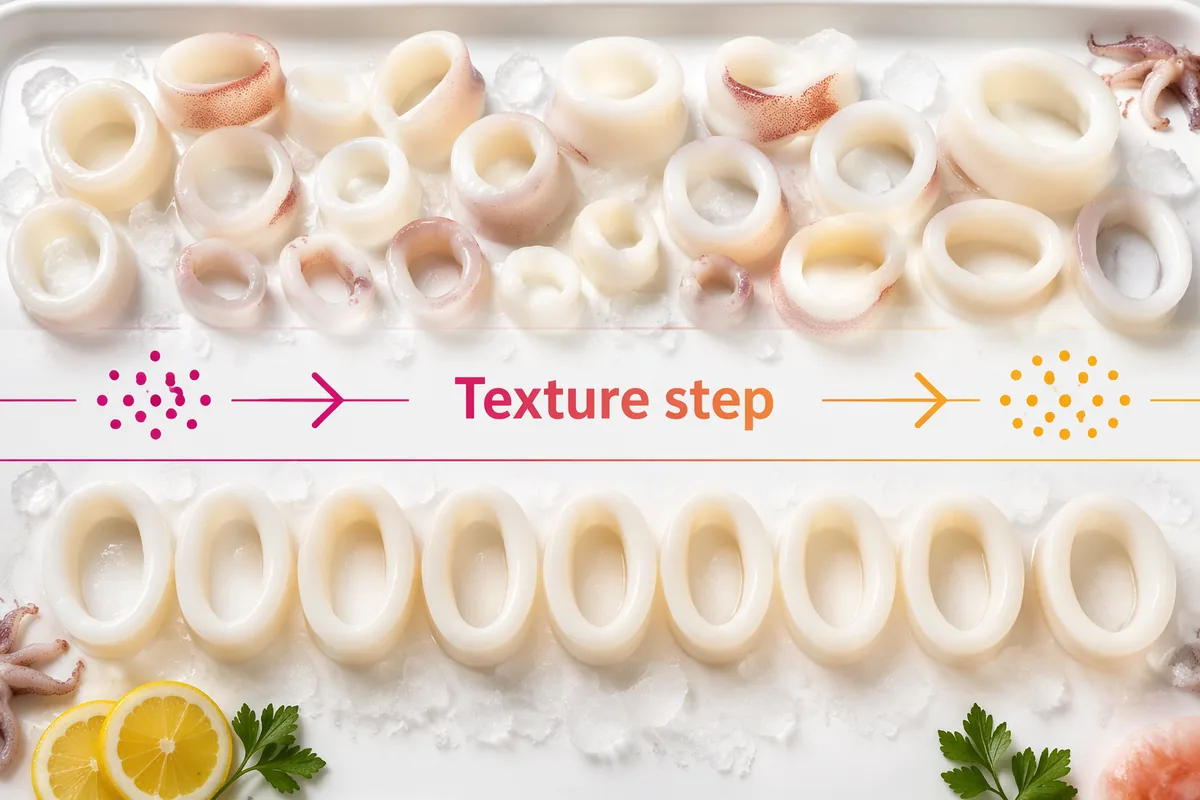
Ingredient suppliers sell papain to food manufacturers directly as a meat-tenderizing ingredient, and they aim it at seasoning makers and casual snack-food producers as well as meat plants. For a seasoning blender, papain is one more functional ingredient in a tenderizing seasoning; for a snack maker it is a processing step for the meat inside the snack. The market also sells tenderizing papain as application-specific grades: one grade, for example, is labelled for tenderizing squid and is packed in 1 kg bags. A grade name like that tells you the intended use, not the activity, the carrier or how it performs in your product.
Ask what makes a named grade different: activity, carrier, particle size, or only the label. • Compare named grades by declared activity and by a side-by-side pilot run, not by name. • Seafood such as squid needs its own pilot run, because thin, lean muscle softens faster than red meat.
Formats, grades and pack sizes we supply
We supply papain as a white to light tan powder with activity grades from 6,000 to 30,000 USP units/mg. Packs are 1 kg, 5 kg and 25 kg, and the minimum order is 1 kg, so a buyer can qualify a grade on a small pack before ordering production volumes. Shelf life is 24 months sealed in a cool, dry store. Resellers and blenders can choose the grade that fits the products they sell on; tell us the application and we will suggest which grade to trial.
Activity: 6,000–30,000 USP units/mg. • Packs: 1 kg, 5 kg, 25 kg. • Storage: sealed, cool and dry; 24 months.
Pilot run before a volume order
Run the pilot on the cut, brine or blend and equipment you will use in production. Compare an untreated control with two or three dose levels and measure bite, purge, cook yield, slice integrity and appearance. Include the real waiting time between dosing and cooking, because papain keeps working until heat stops it and delays on a busy line are where over-softening starts. Confirm that your cook step stops the enzyme in the actual product size. Disperse the powder in the water or brine phase before it meets the meat, so there are no local hot spots.
Control plus two or three dose levels. • Realistic hold times before cooking. • Heat stop checked in the real product. • Dispersion before contact.
Food, brewing, supplement and cosmetic grades are not interchangeable
Papain is sold into meat processing, brewing, supplements and cosmetics, and the same supplier may list grades for all of them. Grade requirements and documentation differ by use. A meat processor should buy material qualified for food processing and for its own market, and should not rely on supplement or cosmetic listings, or on search phrases such as papain enzyme peel or papain digestive enzyme, to judge suitability for a production line. Ask for the COA, TDS and SDS of the exact grade offered.
Confirm the grade is meant for food processing. • Check documents for the exact grade and lot. • Keep supplement and cosmetic grades out of meat lines.
What to send for a wholesale quote
A complete inquiry gets a faster, more accurate quote. Send the product and the activity grade (or the result you need), the quantity per order and per month, the destination country and port, your application, and the documents your QA or your customers need. Prices and lead times are quoted per order. Resellers: tell us the markets you sell into and the pack sizes your customers buy.
Grade or activity. • Quantity per order and per month. • Destination country and port. • Application. • Documents needed (COA, TDS, SDS).
Papain for Research & Industry
Need Papain for your lab or production process?
ISO 9001 certified · Food-grade & research-grade · Ships to 80+ countries
Frequently Asked Questions
Is papain digestive enzyme the same as papain for meat processing?
It is the same enzyme family, but the grade and documentation differ by use. A meat processor should buy a food-processing grade with documented activity and a COA, TDS and SDS for the exact grade, not a product positioned as a supplement.
Which papain grade should a seasoning blender or snack maker start with?
Start from the application and the result you need, then trial one or two grades from the 6,000–30,000 USP units/mg range in a pilot run. Tell us the product and we will suggest the grades to test.
Are squid or seafood papain grades different from meat grades?
Some grades are sold for a named use such as squid. Ask the supplier what differs in activity, carrier or particle size, and test it in your own product: lean seafood muscle can soften faster than red meat.
What pack sizes and minimum order do you offer?
Packs are 1 kg, 5 kg and 25 kg, and the minimum order is 1 kg. Larger volumes are quoted per order.
What should I send to get a quote?
The grade or activity, quantity per order and per month, destination country and port, application, and the documents you need. Send it to hello@mail.enzymecontact.com or use the quote form.
Request a Wholesale Papain Quote
Send the grade or activity, quantity and destination country. We quote 1 kg, 5 kg and 25 kg packs for processors, blenders and resellers, with a free sample for qualified inquiries. Specification: /applications/papain-powder-commercial/. See our application page for Papain Powder for Commercial Processing at /applications/papain-powder-commercial/ for specs, MOQ, and a free 50 g sample.
Contact Us to Contributehello@mail.enzymecontact.com